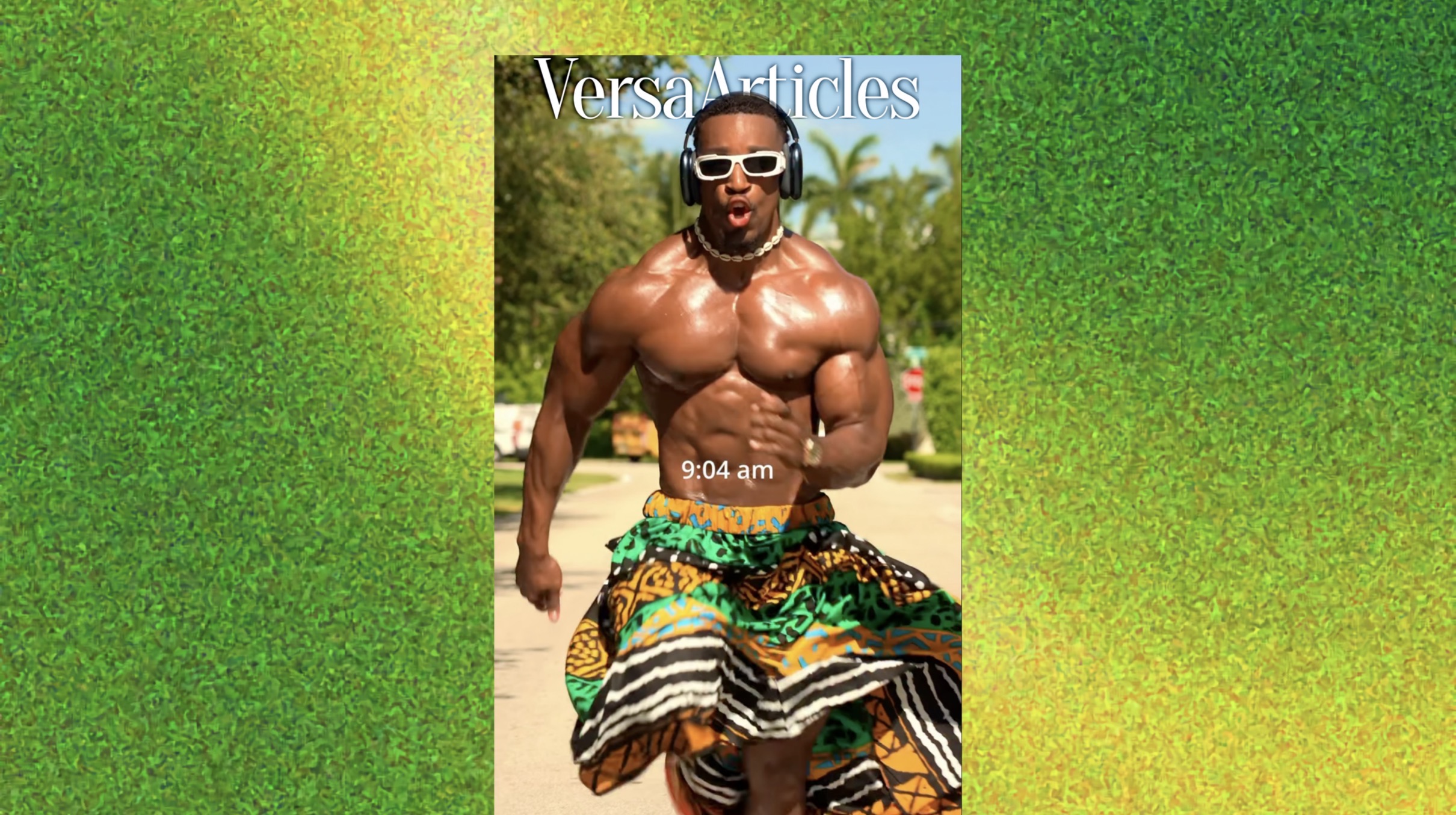
If you were active on social media in March 2025, you saw it. A jacked American in a darkened room, removing tape from his mouth at 3:52 AM, dunking his face into a bowl of ice water, rubbing a banana peel on his skin, drinking Saratoga Springs water like it was a spiritual ritual, all of it timestamped with military precision. Ashton Hall's morning routine video exploded on X on March 20, 2025, racked up over 700 million views, and launched one of the most replicated content formats the internet has ever produced.
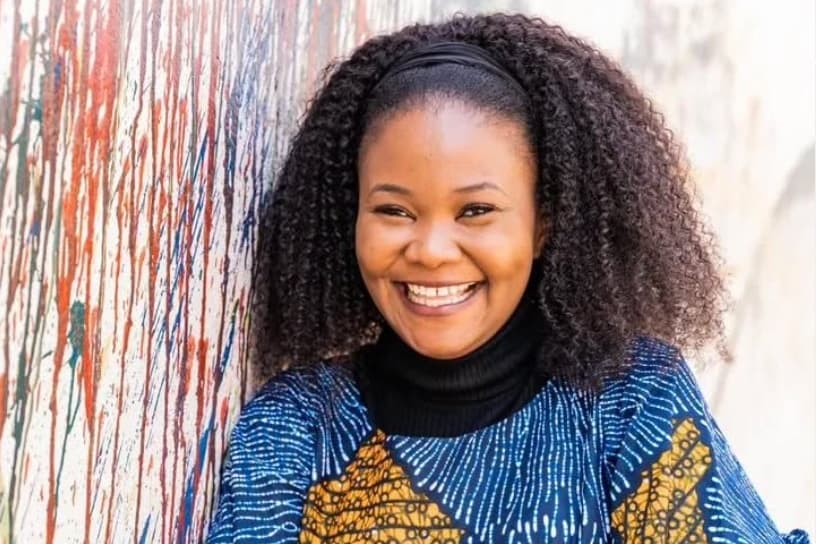
Spotify parodied it. McDonald's parodied it. Logan Paul parodied it. The Duolingo owl parodied it. And somewhere in Zambia, Emmanuel Mubanga with 1.5 million TikTok followers and 33.5 million likes parodied it too.
Who Is Ashton Hall?
Born in Jacksonville, Florida, Ashton Hall played running back at Alcorn State University before transitioning out of football and into the fitness space. He worked as a furniture mover, then at LA Fitness, before building his online coaching brand... now a multi-platform operation with close to 19 million Instagram followers, a supplement line (WorthySupps), and a coaching program that generates what he describes as seven-figure annual revenue.
His original morning routine video, posted to Instagram on February 7, 2025, captioned "Day 191 of the morning routine that changed my life 3:50am to 9:30am" had been building quietly for months. When it was reposted to X on March 20, everything changed. The gap between Hall's dead serious presentation and the sheer absurdity of what he was actually doing turned the video into a perfect meme template. His only line in the clip, "So looking at it bro, we gotta go ahead and get in at least 10,000," became a cultural shorthand for hustle bro excess.
The parody wave that followed was genuinely global. French influencer Tibo InShape joined in. Indian creators joined in. And across TikTok's African corners, creators joined in too, including Mubanga, who took the format and spun it in his signature Zambian comedic register, relatable and culturally rooted in a way the American original was not.
Emmanuel Mubanga: Zambia Was Already There
Emmanuel Mubanga is one of the most followed Zambian creators on TikTok 1.5 million followers, 33.5 million likes, built on humorous and deeply relatable content about everyday Zambian life. Skits. Relationship dynamics. Family moments. Cultural references that land precisely because they do not try to be anything other than Zambian.
When Ashton Hall's routine went viral globally, Mubanga hopped on. No luxury pool, no matte black Ferrari, no Saratoga water. The joke was in the gap... the contrast between Hall's hyper produced American excess and the lived reality of a Zambian morning. That contrast is exactly what made the format travel so well globally, and Mubanga understood it instinctively.
Zambia did not wait to be discovered. When the moment was there, the country's creators showed up.
Why This Africa Campaign Is Bigger Than It Looks
To understand what Ashton Hall is doing with Africa, you need to understand what happened in India first.
After his morning routine went viral, Indian creator Yogendra Kushwah from Morena, Madhya Pradesh began recreating Hall's videos in a desi village context. No luxury setup. A small room instead of designer bedding. A local gym with basic equipment instead of a high end facility. The contrast worked the same way it worked for every other parodist except Kushwah played it straight. He leaned in fully. He became "Indian Ashton Hall" and stayed there, posting consistently, building an audience on the gap between inspiration and circumstance.
Hall noticed. He flew to India. He visited Kushwah's village. The two collaborated. And then Hall gifted Kushwah a brand new Mahindra Thar Roxx, worth approximately Rs 16–17 lakh posting the moment with the caption: "A promise is a promise." The video got 38 million views and over a million likes in under 24 hours. Kushwah reportedly gained a million followers in a single week.
That result is now the headline of Hall's Africa pitch. The trailer for "African Ashton Hall: The Search Begins" opens with Hall in Los Angeles, driving a matte black Ferrari SF90, taking a call where he explicitly references the India collaboration: the creator "gained a million followers in one week." The message to every African fitness creator watching is direct: being chosen for this changes your trajectory.
"The Search Begins" - Breaking Down the Campaign
Ashton Hall officially announced the African campaign via a trailer posted in early June 2026, with a follow-up teaser dropping on June 25 setting a June 28, 2026 launch date.
The trailer's visual language is deliberate and culturally specific. Hall appears wearing a traditional red Ozo cap, coral bead necklace, and a wrapper wardrobe coding that points clearly toward West African tradition, specifically Nigerian Igbo or Edo culture. He sprints through hilly terrain, is chased by men in sharp formal suits and suspenders, and leaps into a moving Mercedes G-Wagon. The final scene cuts to Yogendra Kushwah in India, digging in a field when a young boy runs up to hand him a phone. Kushwah answers, tells Hall he is "working on the visa," and asks who is next. Hall's response closes the trailer: "African Ashton Hall. The search begins."
The June 25 teaser escalates the production further, Hall sprinting shirtless through a grass field while a low-flying helicopter hovers directly behind him and a heavy pickup truck pursues him from the ground. He jumps onto the side of a moving silver Denali HD. The campaign is positioning itself not as a fitness content series but as an action franchise.
Hall's June 25 post captioning the teaser included flag emojis for all 54 recognized African countries signalling a continent wide search rather than a single country focus. As of the time of publication, no official tour itinerary or confirmed country list has been released. Zambia has appeared in social replies and captions as a possible destination, but no announcement has been made. The visual cultural coding in the trailer the Ozo cap, coral beads, wrapper points most specifically toward Nigeria as the likely primary anchor.
What is confirmed: something launches June 28. The continent is watching.
What This Means for Zambia
Ashton Hall's Africa campaign is a live, open talent search. The India model was not just content, it was a pipeline. Hall's team found Yogendra Kushwah because the internet made it impossible to miss him. Consistent output, a distinct local twist on the format, and genuine visibility built the path to collaboration.
That path is open right now for Zambian creators. Emmanuel Mubanga already demonstrated that Zambia can produce the cultural translation that makes this format resonate. We are saying the window is now. Zambian fitness creators, gym communities, and content makers who want to be part of this conversation should be posting, tagging, and using the campaign's hashtag before the official search narrows.
The "African Ashton Hall" crown is not yet spoken for. Zambia has a creator culture capable of competing for it.
What Ashton Hall has actually built is not a morning routine. It is a replicable content franchise, a global template that travels precisely because it is broad enough to absorb any local culture and specific enough to be instantly recognizable. The India chapter proved that the format works outside the American context. The Africa chapter is the proof of concept scaling to a continent.
For Zambian pop culture, this is a moment worth paying attention to regardless of whether Hall visits. When the internet's most parodied fitness influencer turns his lens toward Africa, every African creator who already has a version of his format in their catalogue becomes relevant to a new, global conversation. Emmanuel Mubanga was doing this fourteen months ago.
The search begins June 28. Zambia already started.